Everything You Need to Know About Industrial Space in Birmingham
What's Driving Demand for Industrial Property in Birmingham?
Strong logistics infrastructure and tenant diversity
Birmingham's industrial property market offers a huge variety of spaces, catering to businesses of all sizes. Units range from compact 120 sq ft workshops starting at around £88 per month, all the way up to 164,000+ sq ft distribution centres with rents exceeding £35,000 per month. This scale and diversity allows businesses to find spaces that match their operational needs and budget.
Businesses across e-commerce, light manufacturing, logistics, and creative industries are drawn to Birmingham's location advantages. Properties near the M6 and outside the Clean Air Zone are particularly attractive for logistics heavy operations.
What makes this market attractive to occupiers?
Across Birmingham, companies benefit from a wide variety of rental options. Areas like Frankley and Stirchley offer smaller, cost effective spaces outside the Clean Air Zone, while logistics hubs like Prologis Park Midpoint provide large, purpose built warehouses with premium access to the motorway network. Energy efficient developments and ongoing infrastructure investments continue to strengthen Birmingham's appeal as an industrial base.
Which Areas Offer the Best Value and Connectivity?
Birmingham offers a variety of industrial locations that balance cost, accessibility, and property type. The table below summarises key areas by their primary advantages:
| Category | Examples | Key Advantages |
|---|---|---|
| Affordable Units (Outside Clean Air Zone) | Frankley Industrial Estate, Stirchley Trading Estate | Lower rents, strong motorway access, no Clean Air Zone charges |
| Character Properties (Central Locations) | Jewellery Quarter, Digbeth | Creative and mixed-use spaces, central visibility, unique building styles |
| Purpose-Built Logistics Hubs | Prologis Park Midpoint, Matrix Point | Large-scale units, dock loading, regional and national distribution access |
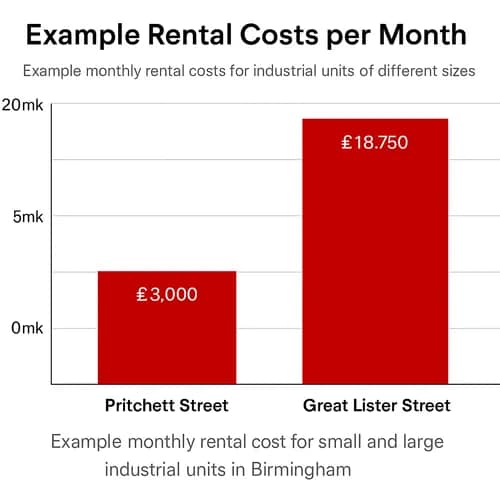
Pricing often depends on unit size, location, and available features. For example:
- A 5,000 sq ft unit in Pritchett Street rents for around £3,000 per month.
- A 28,987 sq ft trade counter/warehouse on Great Lister Street is available at £18,750 per month.
Areas with standout transport links
- Matrix Point: Located just off M6 Junction 6, offering fast access across the Midlands and beyond.
- Prologis Park Midpoint: Close to 11 motorway junctions, ideal for businesses with national distribution needs.
- Gateway Estate: Near Birmingham Airport and the NEC, providing easy air freight and exhibition logistics opportunities.
Some central areas like the Jewellery Quarter fall within the Clean Air Zone, adding operational costs of £8 per day for non-compliant vehicles. Estates outside the zone, like Frankley, help businesses avoid these charges while maintaining strong connectivity.
Depending on your business type, you may also want to consider a retail-oriented industrial unit such as a trade counter.
What Should You Look for in an Industrial Unit?
Match features to your operations
The right industrial unit depends on your business needs. Light manufacturers often require basic utilities and flexible workspace. Logistics providers prioritise features like high eaves, strong floor loading, and easy access to major road networks. Creative and trade-focused businesses may look for street frontage, parking, and adaptable layouts.
Feature checklist for comparison
When assessing industrial spaces, consider the following key features to ensure the property aligns with your operational needs:
| Feature | Purpose |
|---|---|
| Eaves height | Required for installing racking or mezzanine levels |
| Power supply | Ensure sufficient capacity for machinery or equipment needs |
| Loading bays | Determine if dock-level or level access fits your delivery operations |
| Yard space | Allows for HGV movements, trailer parking, or external goods storage |
| Integrated offices | On-site space for administration and staff facilities |
| Security features | Look for CCTV, gated access, or 24-hour monitored sites |
High specification units may also include BREEAM ratings, EV charging points, LED lighting, and solar panels, offering additional cost savings and future-proofing benefits.
Before choosing a unit, review these 8 questions to ask when touring warehouse space.
How Can You Negotiate a Better Lease Deal?
While lease structures are generally standardised, there is often flexibility during negotiation, especially if you are a strong tenant or if the unit has been vacant for some time. If you're negotiating terms on a full repairing lease, it's important to understand FRI leases and how they impact tenant responsibilities. Common points to negotiate include:
- Rent-free periods: Often available for longer lease commitments.
- Graduated rent: Lower initial payments that increase as your business grows.
- Fit-out allowances: Contributions towards adapting the space to suit your operations.
- Break clauses: Early exit options to increase flexibility.
- Service charge caps: Protect yourself against unexpected increases.
For properties requiring significant fit outs, it's common to negotiate an improvement contribution of £10-£15 per sq ft, or to offset these costs through additional rent-free periods.
Need help with the terms? Review our guide to common commercial property terms or learn more about how rent reviews work in leases.
Are Sustainable Industrial Units Worth the Premium?
Many new developments in Birmingham incorporate sustainable features, but these units often come at a higher rental price. However, the savings over time can outweigh the upfront costs:
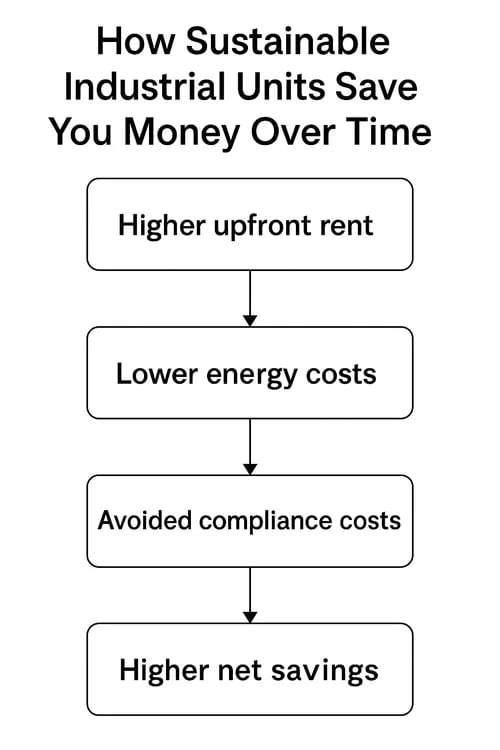
- A 30,000 sq ft BREEAM Excellent unit can save £52,500-£67,500 annually in energy costs.
- Solar installations typically reduce electricity bills by 25-30%.
- High EPC-rated buildings help avoid future penalties under evolving MEES regulations.
Sustainable features can also improve long term returns, see how yield calculations can reflect long term cost savings.
Non-financial upside
Green buildings also support staff wellbeing, strengthen your brand's ESG profile, and may become essential for securing contracts with sustainability focused partners.
Understanding how business rates affect your operating costs can help you evaluate the true return on investing in a sustainable property.
Final Takeaways: Why Businesses Choose Birmingham for Industrial Space

Birmingham offers a rare combination of urban access, extensive transport links, and flexible industrial property options. Whether you're a growing manufacturer, a national distributor, or a creative brand seeking a central location, there are opportunities to match every business model. If you're also exploring office space trends and leasing opportunities in Birmingham, you'll find detailed guidance on flexible workspace, top districts, and emerging investment zones.
With rental options ranging from small workshops to mega distribution centres, strong infrastructure investment, and increasing availability of sustainable buildings, now is a smart time to explore industrial space in Birmingham.
Start your search today by browsing industrial units to rent in Birmingham.
Frequently Asked Questions
How long does it usually take to lease an industrial unit in Birmingham?
Lease timelines vary, but most standard industrial lettings close within 4 to 8 weeks. Larger or customised units may take longer due to fit out negotiations and legal reviews. Speed depends on tenant readiness, documentation, and property availability.
Can I sublease part of my industrial space to another business?
Subleasing is possible, but only if your lease allows it. Most agreements require landlord consent, and some restrict subletting to specific conditions. Always check your lease terms and consult a solicitor before entering a sublease arrangement.
What are the risks of choosing a unit inside the Clean Air Zone?
Properties inside the Clean Air Zone may add daily costs for non-compliant vehicles, increasing operating expenses over time. If your business relies on older diesel fleets or frequent deliveries, these charges can quickly impact margins.
Are there government incentives for leasing sustainable industrial properties?
While there are no direct lease subsidies, businesses may benefit from capital allowances, business rate relief, or energy-efficiency grants tied to building performance. Some local councils offer additional support for BREEAM or EPC-rated buildings.
