Key Steps and Timeline for Renting Office Space
A Clear Roadmap to Renting Office Space
Finding the right office space can either set your business up for success, or slow everything down. The difference often comes down to timing and preparation.
Whether you're leasing 500 or 50,000 square feet, the process tends to follow five key stages. Each one plays a role in helping you secure space that fits your team, timeline, and budget:
- Planning & Requirements: Clarify what your business needs and how much space you'll need.
- Property Search & Negotiation: Explore available buildings, compare locations, and negotiate lease terms.
- Legal & Administrative: Finalise the lease with professional support and handle documentation.
- Fit-Out: Modify or customise the space, from basic refresh to full build-out.
- Move In: Coordinate logistics and begin using the space.
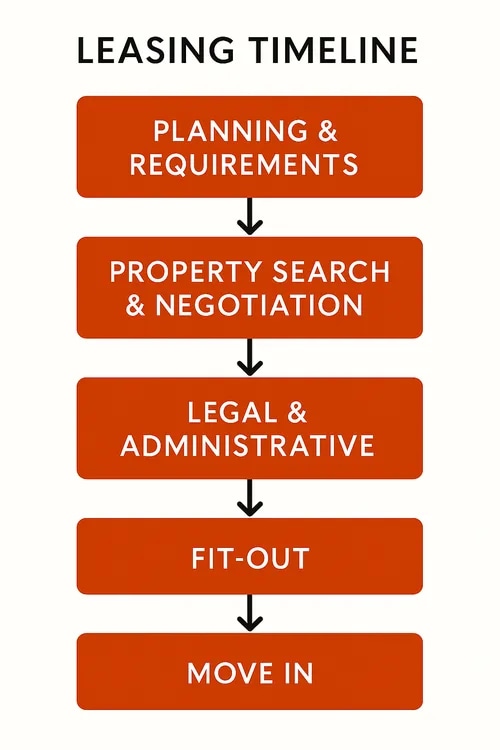
Each stage varies in length depending on your office type, the condition of the space, and how fast you need to move. The sections below break down what to expect at each step, and how to stay ahead of delays.
Planning & Requirements
The first step is clarifying what your business needs from a workspace. Consider how many employees you're accommodating, whether you expect to grow, and the type of office layout that supports your daily operations.
Start by estimating how much space you'll need. A small team in a move in ready suite may be operational in as little as three months. Larger teams or companies needing bespoke layouts may need 6 to 24 months to find, fit out, and occupy a space, especially for premises over 25,000 square feet. Understanding how different commercial property types operate helps clarify which workspace model aligns with your business needs and timeline.
Decide early whether a traditional lease, managed office, or serviced office best fits your budget, timeline, and branding needs. Understanding commercial building value at this stage can also help align your expectations with market realities. This decision affects everything that follows.
| Lease Type | Time to Occupy | Flexibility | Customisation | Upfront Cost |
|---|---|---|---|---|
| Serviced Office | Few days | High (short-term contracts) | Low | Low |
| Managed Office | 2–4 months | Medium | Moderate | Medium |
| Traditional Lease | 6–12 months | Low (long-term commitment) | High | High |
The table above compares multiple variables. This chart below focuses specifically on how long each lease type typically takes before you can move in.
Office Type Affects How Long the Process Takes
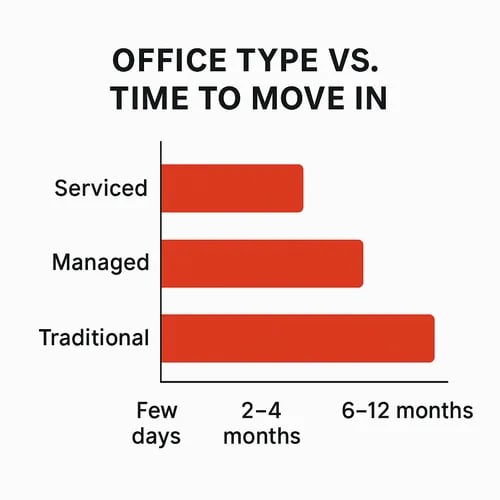
The timeline for renting office space depends heavily on the type of space you choose.
If you're working within a tight timeframe, exploring flexible office space for rent options can help you move in faster and keep your business plans on track.
Office Space for Rent
Property Search & Negotiation
Once you've defined your needs, the next step is finding a space that aligns with your location, size, and budget requirements. This stage typically takes one to three months, depending on availability and how quickly decisions are made.
Search with Your Priorities in Mind
Begin by shortlisting locations based on team commutes, client access, and proximity to transport links. City centres offer visibility and convenience, while fringe areas may offer better value or larger floorplates.
Think beyond rent, consider service charges, business rates, and repair obligations. A property may appear affordable on paper but carry higher hidden costs.
Use LoopNet to browse available office space for rent across the UK. It's the most comprehensive online marketplace for commercial listings, with filters for size, location, price, and property type to help you narrow down your shortlist.
Use a Local Agent to Your Advantage
A commercial property agent can save you time and help you avoid poor value deals. They'll know which landlords are offering incentives like rent-free periods, and which buildings may soon become available but haven't been publicly listed yet.
Once negotiations begin, you'll also need a solicitor to review lease terms and highlight legal risks. While your agent helps you secure the deal, your solicitor ensures you're protected throughout the lease.
Legal & Administrative
Once Heads of Terms are agreed, your solicitor will review the lease, check for risks, and guide you through final steps.
Engage a Solicitor Early
Commercial leases can include broad repair obligations, reinstatement clauses, and limits on subletting. Unless a schedule of condition is included, you may be liable for repairs beyond the property's current state. Early legal input helps avoid costly surprises.
Plan for Stamp Duty Land Tax (SDLT) and Admin Fees
If your lease value exceeds £150,000, SDLT applies, typically 1%. Payment and filing must be done within 14 days of completion. Your solicitor can manage both.
Build in Negotiation Time
Lease finalisation often takes two to eight weeks. If alterations are needed, expect added time and costs for the landlord's legal and surveyor fees. Be sure to review clauses like the rent review, which can affect your long term rental costs.
Fit-Out
Once the lease is signed, it's time to turn an empty shell, or a dated suite, into a space your team can actually use. How long this takes depends on how much work is needed and who's doing it.
Scope Determines the Schedule
If you're just repainting walls and replacing flooring, you might be ready to move in within a few weeks. But if you're installing meeting rooms, breakout areas, or custom cabling, expect three to six months, sometimes longer for large scale layouts or listed buildings with planning constraints.
Get Consent Before You Build
If the work involves structural changes or installing heavy equipment, you'll likely need formal landlord consent. This can trigger additional legal and surveyor fees, and slow things down if your plans aren't detailed. Your solicitor will typically handle the paperwork, but your project manager or contractor should flag anything that might require approvals early.
And one more thing: some landlords require you to reinstate the space when you leave, so that slick bespoke reception desk? You might have to rip it out in five years. Read the fine print.
Move In
With fit-out complete, you're in the final stage: turning your new space into a functional workplace. While this step is usually quick, it still requires careful planning to avoid last-minute delays.
Most businesses complete the move in process within five to fifteen days, but that depends on the size of your team and how much setup is required.
- Check final approvals: Make sure all inspections are passed and occupancy permits are in place before move-in.
- Coordinate logistics: Align movers, IT providers, and your team on a shared schedule. Test all systems before staff arrive.
- Track final costs: Monitor last-minute expenses like cabling, signage, or temporary setups, especially if tied to landlord contributions.
FAQs: Next Steps and What to Expect
How soon can I sublet my office space if my business grows or changes?
It depends on your lease terms. Most commercial leases include clauses about subletting, and many restrict it for the first 6-12 months. You'll usually need landlord consent, and subletting may be limited to specific conditions or tenant types. Always review this with your solicitor before signing.
What's the difference between a lease break clause and a termination clause?
A break clause allows you to end the lease early at a specific date or under certain conditions, often with notice. A termination clause typically outlines events, like default or insolvency, that allow either party to exit the lease. A break clause gives more flexibility; a termination clause is for legal enforcement.
Do landlords always require reinstatement at the end of the lease?
Not always, but it's common. Reinstatement means returning the space to its original condition, even if your fit-out improved it. You can negotiate this in advance or document the original condition in a schedule of condition to limit your liability. Ask your solicitor to review this before signing.
